
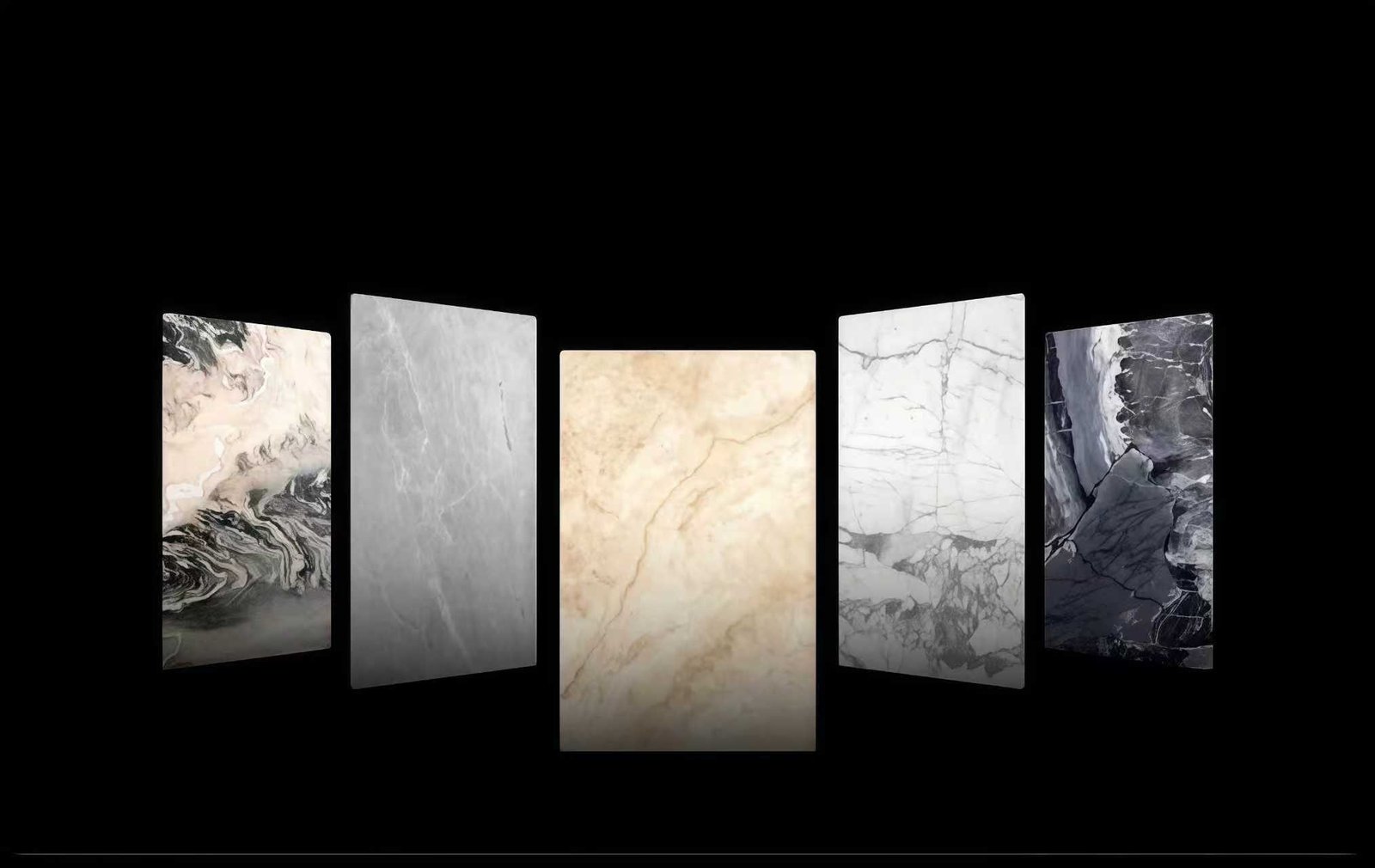
Italian Marble: The Epitome of Luxury and Elegance
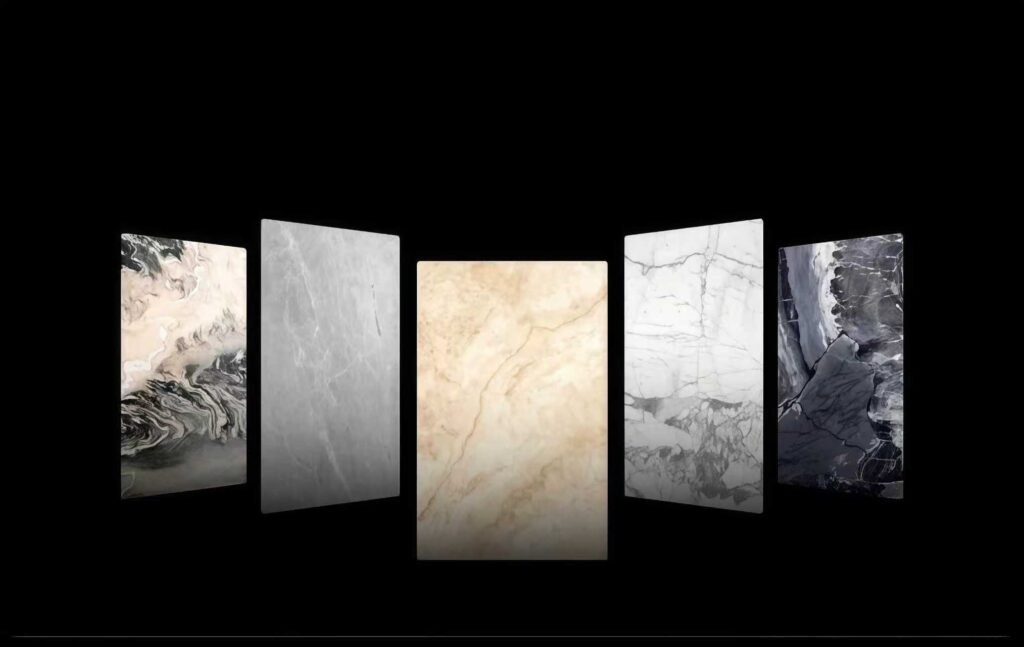
Italian marble, particularly Carrara marble, has become a symbol of global high-end architecture. Composed primarily of calcite, it possesses unique characteristics. First, visual aesthetics is its most prominent advantage. Its delicate texture, elegant veining, and soft tones create a tasteful spatial atmosphere. Second, ease of processing enables designers to realize complex design concepts such as bas-relief and inlay. Third, rich color diversity ranges from classic white to noble black and gold, meeting various design styles.
However, Italian marble has notable disadvantages. Relatively weak durability with hardness of only 3-4 makes it susceptible to wear in high-traffic areas. Susceptibility to acid corrosion means even weak acids can leave etching marks. Easy staining as dark liquids may leave permanent marks. Finally, high maintenance costs require frequent polishing and care.
Brazilian Granite: The Model of Strength and Practicality
Brazil possesses the world’s richest granite resources, renowned for superior quality and rich colors. Composed primarily of quartz, feldspar, and mica, granite’s hardness of 6-7 far exceeds marble’s 3-4. This provides excellent wear resistance and scratch resistance, maintaining aesthetic appeal even in high-traffic environments.
Strong acid-base resistance is an important advantage, showing good resistance to various chemical substances, particularly suitable for restaurants and bars. Good stain resistance with relatively small pores effectively resists staining after protective treatment. Rich color diversity from classic black to modern green and blue meets various design requirements.
Granite’s disadvantages include: relatively rough visual effect lacking marble’s sophistication; greater processing difficulty with higher costs and limited complex design capabilities; lower veining controllability with significant texture variations among batches.
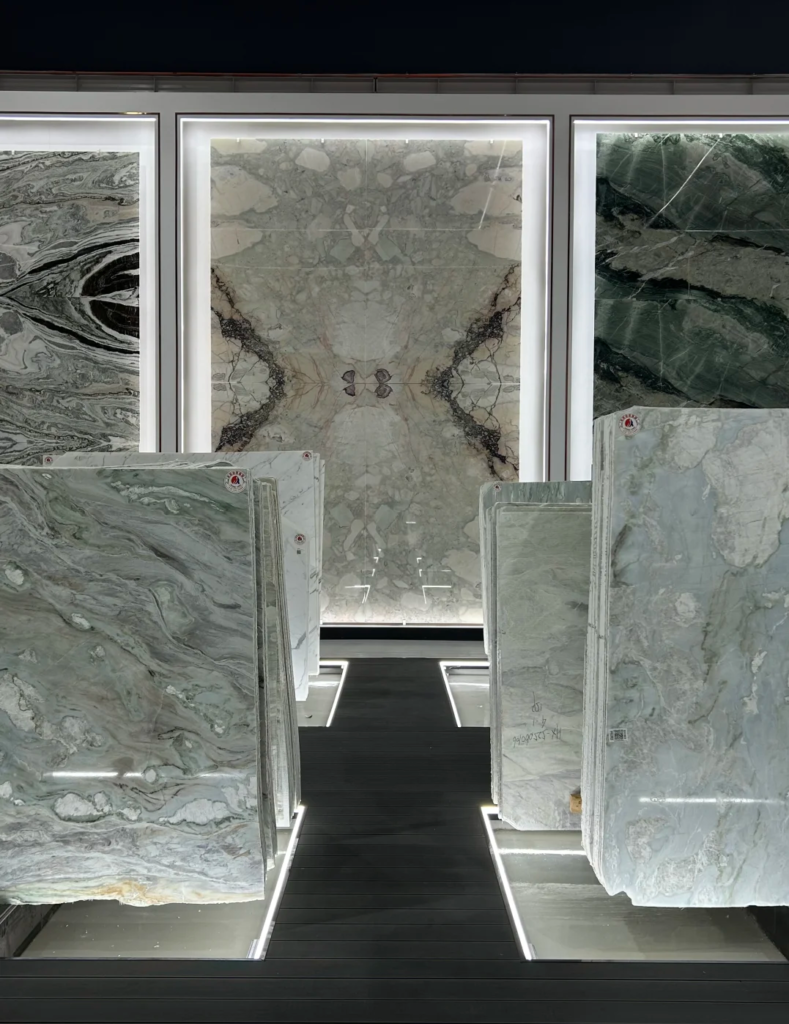
Detailed Comparative Analysis
| Comparison Dimension | Italian Marble | Brazilian Granite | Recommended Application |
|---|---|---|---|
| Hardness | 3-4 | 6-7 | Choose granite for high-traffic areas |
| Wear Resistance | Moderate | Excellent | Choose granite for corridors, lobbies |
| Acid-Base Resistance | Weak | Strong | Choose granite for restaurants, kitchens |
| Stain Resistance | Moderate | Good | Choose granite for easily contaminated areas |
| Visual Aesthetics | Excellent | Good | Choose marble for lobbies, suites |
| Processing Difficulty | Easy | Difficult | Choose marble for complex designs |
| Maintenance Cost | High | Low | Choose granite for long-term cost |
| Unit Price/m² | $40-110 | $20-55 | Choose granite for limited budget |
Hotel Project Application Scenarios
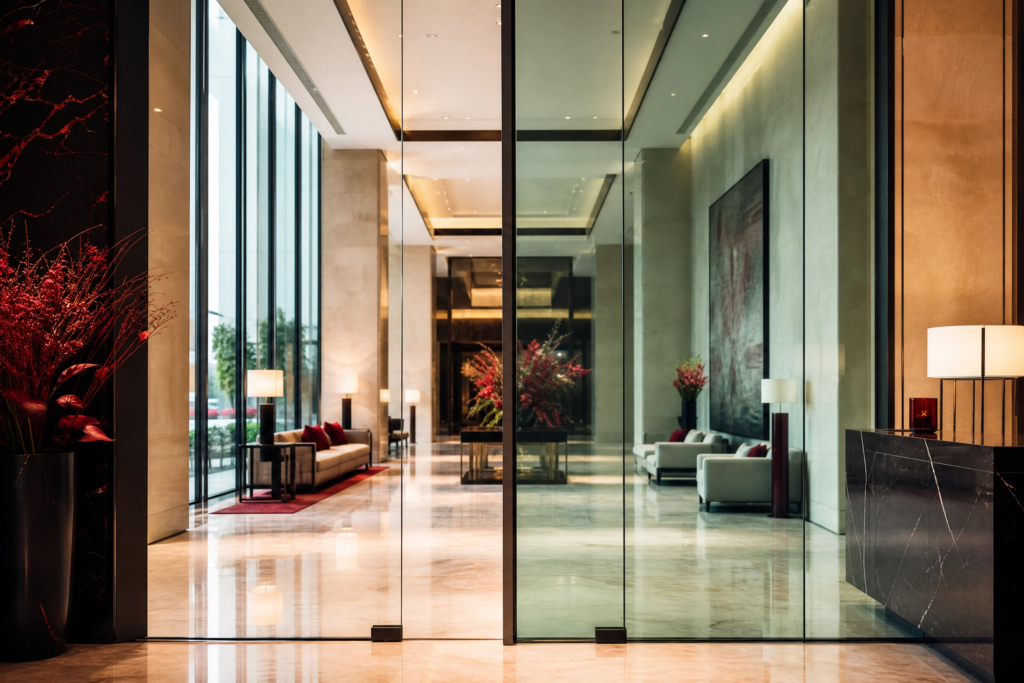
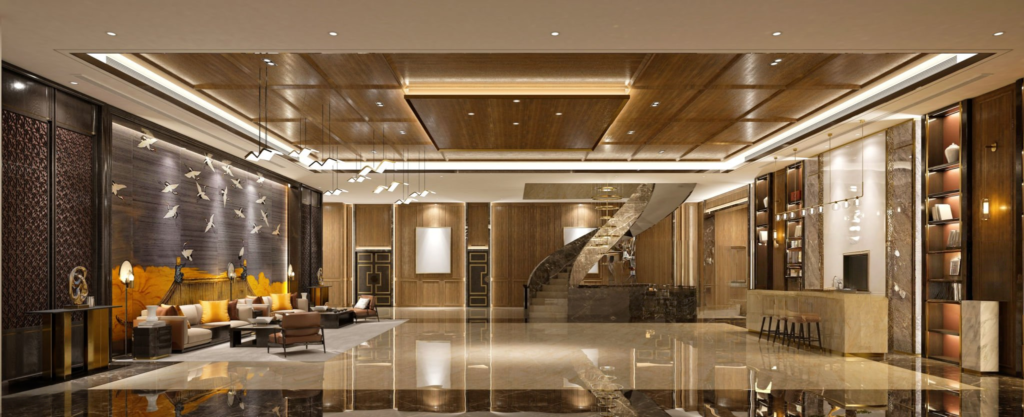
The wisest approach is flexible combination based on different areas’ functional needs. Lobbies and reception areas should use Italian marble, whose elegant veining and sophisticated texture create a luxurious first impression. Corridors and public areas should use Brazilian granite, whose hardness and wear resistance withstand prolonged foot traffic while reducing maintenance costs. Restaurants and bars should choose granite for its acid-base resistance and stain resistance. Guest rooms and bathrooms should use Italian marble, whose warm texture and elegant veining create a luxurious private space.
George Group’s Professional Recommendations
Based on 18 years of global stone procurement experience, we offer these recommendations:
First, adopt a zoning strategy. Don’t use a single stone throughout the hotel; instead, flexibly combine based on different areas’ functional needs. This ensures durability in high-traffic areas while showcasing luxury in key areas.
Second, prioritize long-term costs. While marble has higher initial investment, considering maintenance costs, granite may be more economical long-term. We recommend full lifecycle cost analysis.
Third, choose quality protective treatment. Regardless of stone choice, quality protective treatment is essential. George Group employs internationally advanced protective technologies.
Fourth, collaborate with professional designers. Stone selection should coordinate with overall design style based on hotel brand positioning.
Fifth, conduct sample testing. Before final decisions, conduct on-site testing to observe performance under different lighting, temperature, and humidity conditions.
Case Study: Five-Star Hotel Stone Application Plan
George Group recently completed a five-star hotel stone application project. The hotel adopted a zoning strategy: lobby and reception area (3,000 m²) used Italian Carrara white marble for luxury; corridors and public areas (5,000 m²) used Brazilian black and gold granite for durability; restaurants and bars (2,000 m²) used Brazilian red granite for warmth; guest room bathrooms (200 rooms) used Italian beige marble for luxury experience.
After project completion, guest satisfaction significantly increased and stone maintenance costs were effectively controlled. The hotel became a benchmark project, attracting visits from numerous international hotel brands.
Conclusion: Making the Most Informed Choice
Both Italian marble and Brazilian granite are premium stone choices. The key is not “which is better” but “which is more suitable for your project.” George Group recommends a zoning strategy, using Italian marble in key areas like lobbies and suites to showcase luxury, and Brazilian granite in high-traffic areas like corridors and restaurants for durability. This ensures both brand image and controls long-term maintenance costs.
We work directly with top stone producers in Carrara, Italy and Minas, Brazil, providing you with the most competitive prices, strict quality assurance, professional custom processing, and comprehensive global logistics services.
Call to Action: Contact George Group’s stone experts today to obtain a customized stone solution for your hotel project. We will provide the optimal stone selection and application plan based on your design philosophy, budget, and functional requirements.